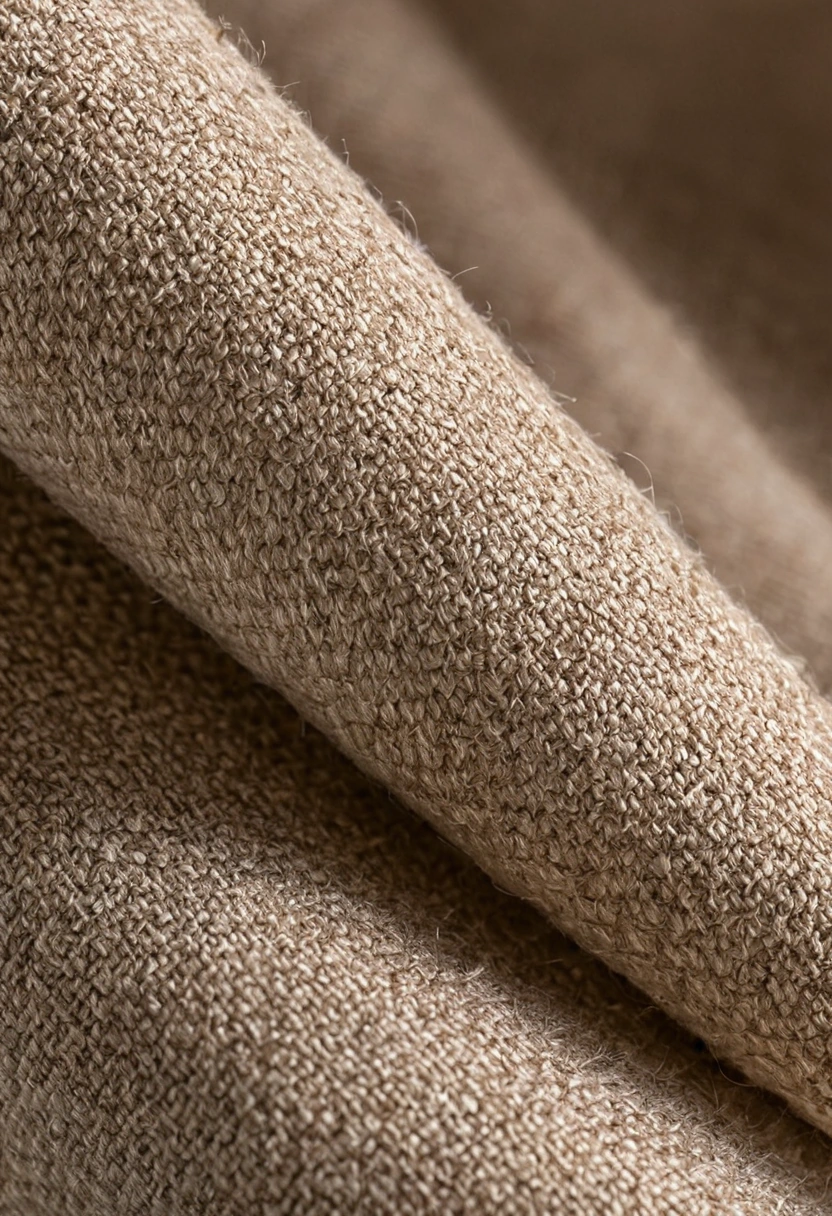
The first textile selected for a room should be the one that fixes the hardest-to-change condition, not the one that appears first in a catalog. Sarelli Textiles is an Italian manufacturer of furnishing fabrics, sheer curtains, and custom carpets. When all three are being chosen, a clear sequence prevents a rug motif, window cloth, and sofa cover from being approved in isolation.
A fixed sofa frame, sun-facing window and large open floor each constrain a room’s textile choices. The sofa’s use determines performance; the window determines transmission and lightfastness; the floor and furniture plan determine rug size. The order of selection can change with the project, but the dependencies should be explicit before any material is cut.
Which decision is least reversible?
The least reversible decision is the one whose later change would force the most other work to be redone. A custom rug with a complex border can lock the room’s pattern scale. Upholstery for a large sectional can lock the dominant color and a substantial yardage order. Curtains can depend on track, finished floor, and window treatment details. Identify the real constraint rather than applying a universal «rug first» rule.
Make a short dependency list. If the existing sofa will stay, its color and dimensions are fixed inputs. If the room has a distinctive inherited rug, the rug becomes the input. If a window requires a certain privacy or fire performance in a particular project, that requirement may narrow curtain options first. A material chosen late can still be important, but it should be compared with decisions already made.
The Carpet and Rug Institute’s planning guidance stresses accurate measurements and special attention to unusual shapes for installed carpet. A loose rug follows a different installation path, yet the need to know its real footprint remains. Ordering a rug before the seating group is dimensioned creates a size problem that no later curtain selection can solve.

When should the rug lead the palette?
The rug should lead when its visible field is the room’s dominant pattern or when a fixed rug must be retained. A broad patterned surface on the floor can supply the colors that upholstery and curtains repeat or deliberately leave quiet. Begin with the rug’s actual field, border, and orientation, then overlay furniture footprints. The apparent palette in a small rug clipping may differ from the colors that remain visible beneath the furniture.
For a new custom rug, the design and size can be reviewed together with the room plan. If a medallion sits under the coffee table, a different layout may be needed. If a border is hidden by the sofa on one side, the field may look unbalanced. The rug design should not be declared final until furniture placement is stable. This is why «rug first» can mean «rug concept first» rather than «rug order first.»
A product sample should include the proposed pile and color, while the drawing should show the complete motif. The Carpet and Rug Institute’s care guide reminds buyers that natural fibers can require special maintenance. Cleaning suitability can narrow the rug selection before its color becomes the palette anchor.
| Fixed condition | Likely first material decision | What follows |
|---|---|---|
| Inherited patterned rug | Rug field and scale | Upholstery and curtain palette |
| Existing large sofa | Upholstery or retained cover | Rug size and curtain color |
| Window with strong exposure | Window treatment function | Fabric color and furniture placement |
| New open plan room | Furniture and circulation plan | Rug footprint, then fabric balance |
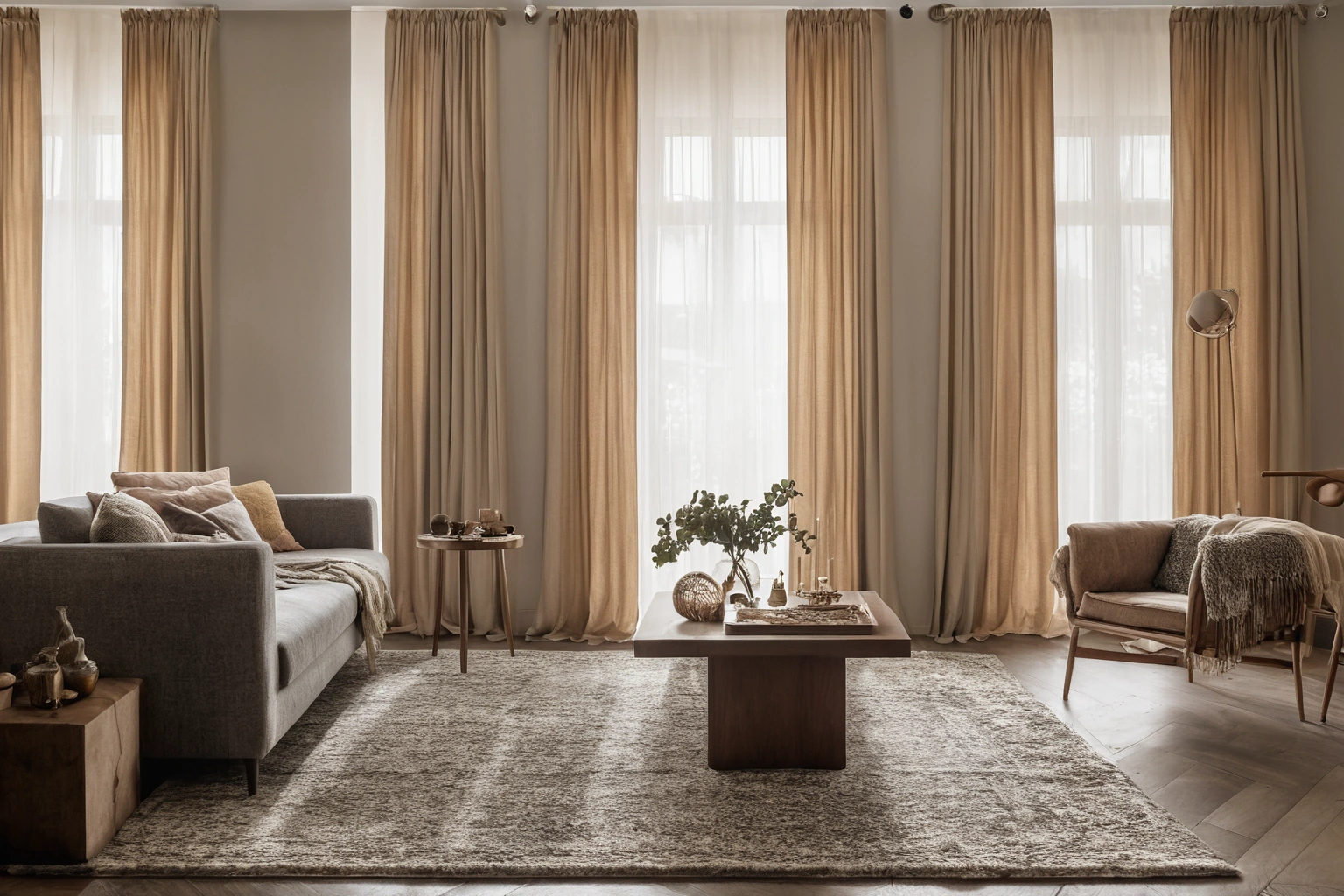
When should upholstery lead?
Upholstery should lead when a large daily-use item sets both the room’s dominant surface and a demanding performance requirement. A sofa fabric may need to satisfy cleaning, seam, abrasion, and lightfastness questions that a decorative curtain does not. The Association for Contract Textiles’ guidelines separate textile tests by construction and application, showing why a color match alone cannot make a curtain cloth suitable for upholstery.
Choose the exact upholstery construction and test it on the furniture shape. Then place rug and curtain samples beside it. A large sofa in a strong color may need a quieter rug; a neutral textured sofa may leave room for a more active floor pattern. The comparison should use the sofa’s finished orientation and the room’s light. A tiny flat swatch can understate how dominant a fabric becomes across several cushions.
If the sofa frame is already ordered, confirm its dimensions and leg positions before finalizing the rug. A fabric choice can be approved earlier than a rug size, but the final sofa footprint still controls how much of the rug remains visible. The sequence therefore has two tracks: technical fabric approval and spatial furniture planning.
When should curtains lead?
Curtains should lead when the window imposes the strongest functional requirement: privacy, glare control, daylight transmission, or protection from direct exposure. A sheer and a lined drape may need separate jobs. The Australian government’s window guidance discusses close-fitting lined coverings for temperature control, showing that fabric and installation geometry both matter. Select the functional window assembly before relying on its color to complete the room.
Look at the curtain open and closed. When closed, it can cover a large wall area and become the dominant room color. When open, it may be a narrow stack that barely affects the palette. Both states need comparison with upholstery and rug. A pale fabric can also change under backlight; a dark one can become visually heavy at night. Approve the actual hanging material under daylight and normal lamps.
Light exposure can limit some fabrics. The Association for Contract Textiles’ drapery lightfastness guidance gives a defined lab benchmark, while noting that test hours do not equal service hours. The exact window orientation and product’s test result belong in the decision. A curtain cannot be chosen simply because its color matches the rug.
How can the sequence remain flexible?
Use provisional and final approvals. A designer can approve a direction for the rug pattern before its exact size is measured, or a curtain color before the final track is installed. Mark those decisions provisional and state what must happen before ordering. The final approval joins product reference, dimensions, technical data, and physical sample.
- List fixed room conditions and the textile decisions they constrain.
- Choose the dominant pattern or functional requirement first.
- Review all three textiles together under room lighting.
- Record what is provisional and what is ready for cutting.
- Reopen dependent choices if furniture or window conditions change.
A sound sequence is a way to reduce rework, not a design doctrine. In one room the rug may lead, in another the window, and in another a daily-use sofa. The materials should finally be approved as a connected set whose size, performance, and appearance make sense in the same occupied room.
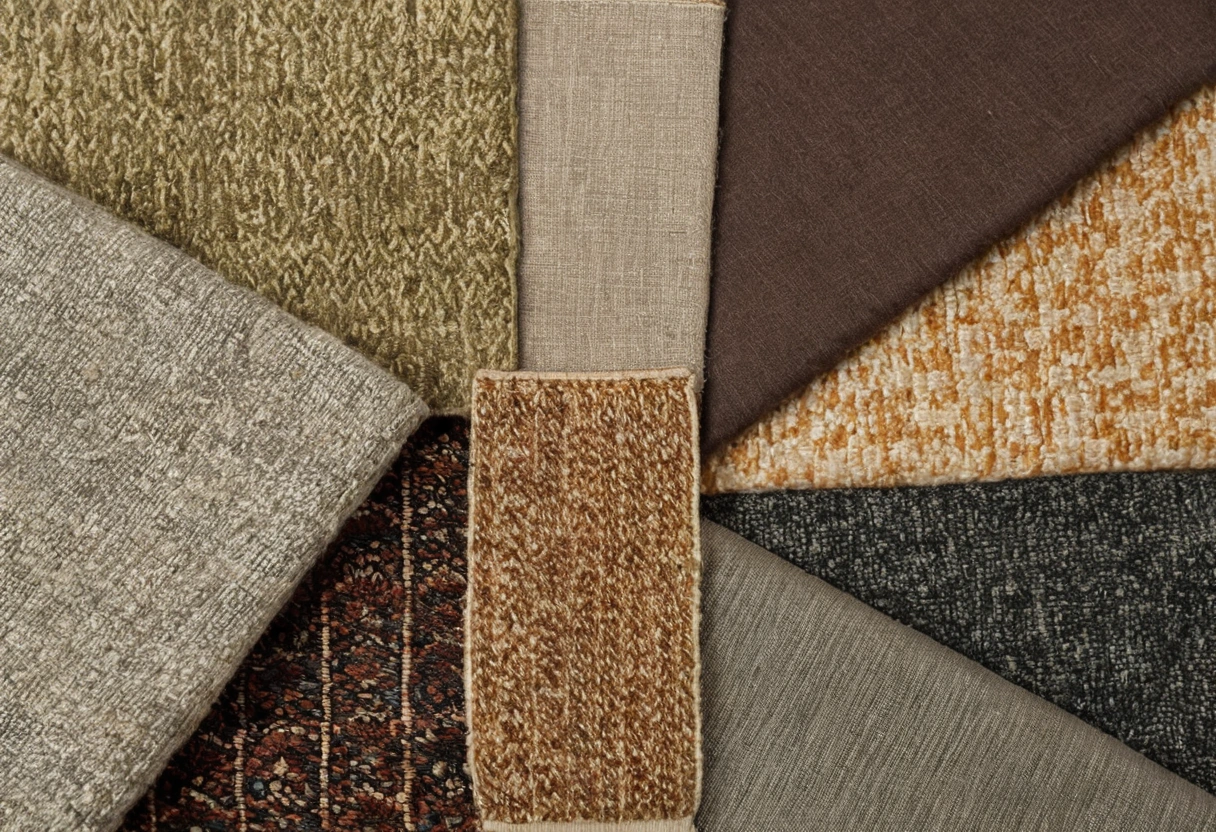
One practical way to see dependencies is to write each pending choice on a card and draw an arrow to the material it affects. Rug width points to sofa-leg placement; curtain opacity points to daytime lighting; sofa fabric points to cleaning and color balance. An arrow does not mean the first choice must be purchased first. It means the second choice cannot be finalized without checking the first. The exercise exposes hidden assumptions in an otherwise attractive mood board.
Keep the sample set small during final review. Too many near-identical colors can obscure the decision. Place the leading material in its actual orientation and compare only the alternatives that meet the technical brief. If a candidate fails its care or performance requirement, remove it before discussing subtle palette differences. That order respects both function and design.